Basic HTML Version












health
link
2
Couldn’t you use some extra energy, especially if
all you had to do was reach for a bottle or can?
This helps explain the allure of energy drinks.
But no matter how sluggish you feel, before
you guzzle one of these beverages, you might
want to know what you’re putting in your body.
Most contain caffeine, often in high doses.
“Some energy drinks may have as much as
500 milligrams of caffeine,” says Saint Agnes
registered dietitian Anne Marie Vaughan. “That’s
about the amount you’ll find in 14 cans of
caffeinated soda.”
The caffeine in energy drinks may give you a
boost at first. But if you’re sensitive to caffeine –
or drink these beverages in excessive amounts –
you may become nervous or restless. You might
even have heart palpitations.
Energy drinks also:
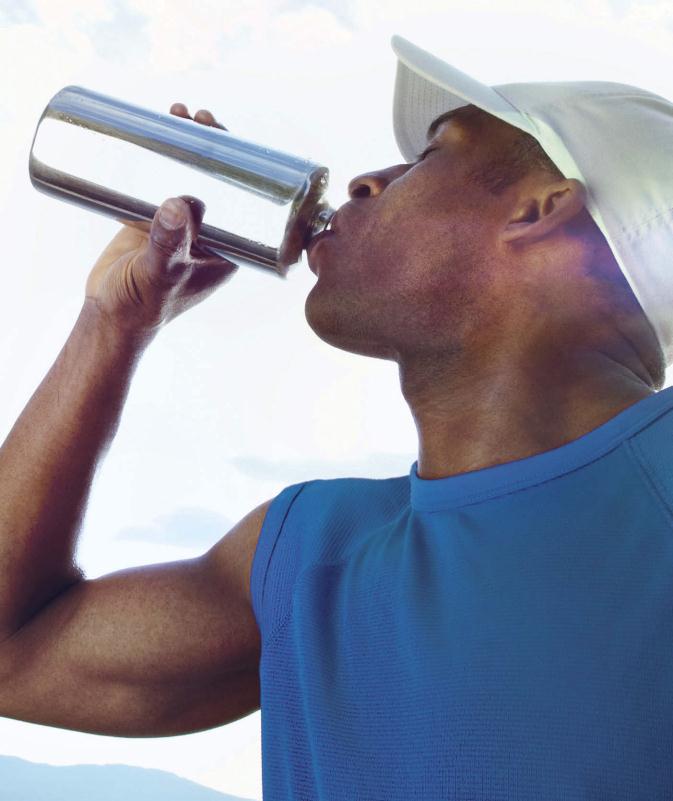
• Act like diuretics, meaning they make you lose
fluids. As a result, they’re not a good way to
hydrate when you’re exercising. You’re better
off drinking water.
• Are not advised for children or adolescents
because caffeine may harm their developing
hearts and brains.
“If you are struggling with fatigue, turning to
energy drinks isn’t the answer,” Vaughan says.
“Making sure your body is getting enough rest
is your best bet, along with getting adequate
hydration and nutrition throughout the day.”
Sources: American Academy of Pediatrics;
American College of Sports Medicine; American
Council on Exercise
NEWS
&
NOTES
HEALTH
Letter from
the president
When it comes to staying healthy, most of
us are aware of certain key numbers. We
know that our No. 1 health threat is heart
disease, that annual mammograms should
start at age 40 for most women and that a
healthy body temperature hovers around
98.6 degrees.
But while we know these numbers
by heart, it’s more often our next-door
neighbor’s sudden stroke or perhaps a
best friend’s battle with breast cancer that
compels us to re-evaluate our own health.
Stories have a way of catching our atten-
tion. That’s one of the reasons we include
real-life examples of local men and women
in each edition of HealthLink.
In this issue, you’ll read how genetic test-
ing gave one family greater peace of mind
(page 5), learn how hyperbaric oxygen
therapy saved a young man from amputa-
tion (page 8), and discover why regular
family meal times matter (page 7). In our
cover story, you’ll learn which screening
exams are most important to you based on
your age and gender.
I’d also like to draw your attention to
several Saint Agnes stories – including
inspiring examples from patients as well as
my own journey back to serve as president
and CEO – that have been appearing on
local television and radio stations and in
local print pieces. These are powerful
testaments to the role Saint Agnes plays in
so many Valley lives. And we look forward
to helping write even more happy endings.
In good health,
Nancy Hollingsworth, RN
President & CEO
Saint Agnes Medical Center
Energy drinks: Take a close look at what’s inside
www.samc.com