Basic HTML Version


health
link
5
Jennifer Anglin knew the lump in her
breast was cause for concern. But
when the need to care for other ill
family members became pressing,
she put her own health on hold. A
year came and went, with still the
same unusual lump. So when the “not
knowing” began nagging her, she
decided to find out for sure.
Days later, a mammogram and fol-
low-up diagnostic tests confirmed that
Jennifer did, in fact, have breast cancer.
“I did not want to hear those words,”
she says. “That fear is gripping.”
She was just 41 years old and had a
history of breast cancer in her family,
so Jennifer’s oncologist referred her
for a genetic consultation at Saint
Agnes Cancer Center. “Genetic coun-
seling is the gift of knowledge,” says
Dawn DeLozier, PhD, medical geneti-
cist at Saint Agnes Cancer Center. “It
helps us determine if individuals are
at an elevated risk for certain types
of cancer, which then allows them to
make more informed decisions about
the best way to care for themselves
and their loved ones.”
Jennifer’s counseling sessions zeroed
in on whether she carried a mutation in
one of two specific genes – BRCA1 and
BRCA2. Everyone has BRCA genes,
but about 60 to 80 percent of women
Know
your risk
BREAST
CANCER
who inherit an abnormal BRCA1 or
BRCA2 gene will develop breast
cancer, reports the National Cancer
Institute. These women are also more
likely than others to develop more than
one breast cancer, ovarian cancer or
other cancers during their lifetime.
Learning whether Jennifer carried a
BRCA gene mutation was about much
more than her own health journey. It
would determine whether other family
members – including her 12-year-old
daughter – were at greater risk. “You
don’t want anyone to go through this,
let alone your own daughter,” she says.
INSIDE INFORMATION
During a typical counseling session,
patients go through a genetic risk as-
sessment based on a complete family
history analysis and medical records
review, an explanation of testing op-
tions, and – in some cases – a simple
DNA blood test.
For those who are found to carry a
mutated copy of BRCA1 or BRCA2,
knowing helps determine the best
medical management.
It also determines whether other
family members should be tested for
the abnormal gene. “But,” Dr. Delozier
adds, “It’s important to remember that
less than 10 percent of breast cancer is
based on an inherited gene mutation.”
Armed with this important informa-
tion, Dr. DeLozier refers many of her
high-risk breast cancer patients to
Saint Agnes Medical Center’s Breast
Clinic. Here, a multidisciplinary team
of specialists – including radiologists,
surgeons, medical and radiation
oncologists, a geneticist, and a Nurse
Navigator – work hand-in-hand to
develop a personalized plan and care-
fully monitor patients for any changes.
Those who are at elevated risk
for breast cancer may be referred
for more frequent mammograms,
annual MRIs or other measures to catch
breast cancer as early as possible.
GOOD NEWS
For Jennifer, relief came the day she
returned to Dr. DeLozier’s office to learn
that her BRCA1 and BRCA2 mutation
test was negative, which meant there
was no fear of passing a faulty BRCA
gene to her daughter. After undergoing
a series of successful cancer treatments,
Jennifer is celebrating being more than
18 months cancer-free and is counting
the blessings of having more answers.
“Knowing is so much better,” she says.
To learn more about genetic
counseling or a hereditary
predisposition to cancer, talk to your
doctor or visit www.samc.com/
genetic-counseling.
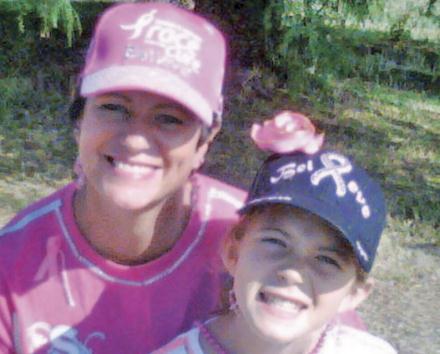
Jennifer Anglin is celebrating more
than 18 months cancer-free.
CHECK THIS OUT!
Regular breast cancer
screening with mammograms
saves lives. If you are due for
your annual mammogram,
visit www.samc.com/
schedule-mammogram, scan
this code with your smart-
phone to request an appoint-
ment, or call
559-450-5656
.
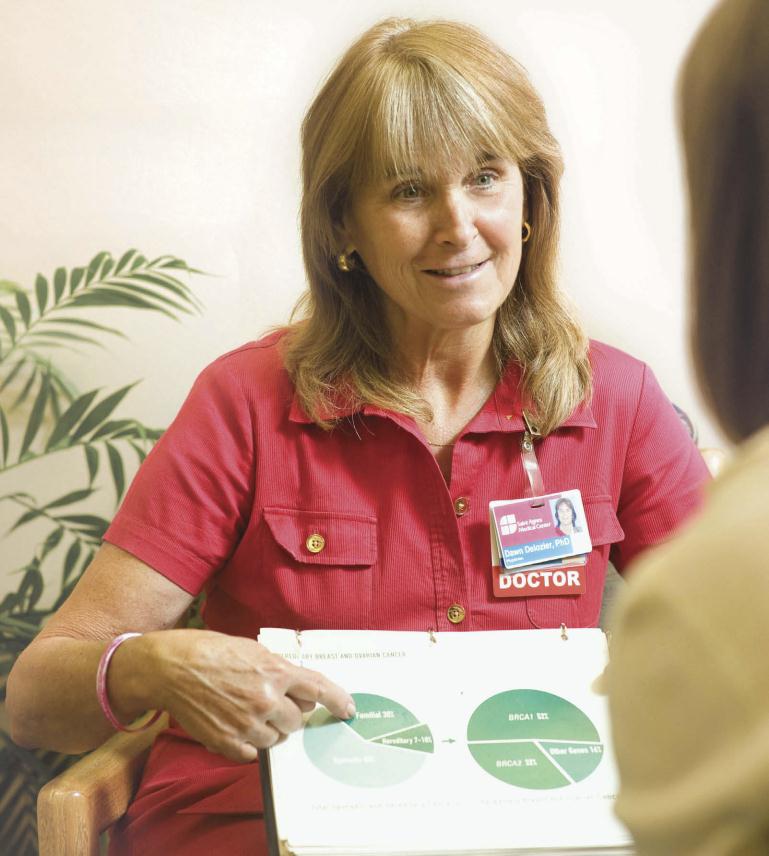
Part of medical geneticist
Dawn DeLozier’s
consultation includes
explaining an individual’s
risk of developing cancer.
Breast cancer
Fall 2012